







JAPAN ALPS AND ISLANDS ADVENTURE

This is a fantastic motorcycle trip that features 12 days of riding in and around the famed Japan Alps and Mt. Fuji during peak fall foliage season. This ride features Honshu and Shikoku Islands. If you have ever wanted to ride the Japan Alps, Mt. Fuji, and explore rugged coastline and densely forested river valleys deep in the Japan countryside to the backdrop of fall colors, this is your chance.

*This is a rider’s ride. There are longer days in the saddle and the roads feature many curves and elevation changes. Get ready to experience some of the best roads of your life!

*This itinerary is for custom groups only. Dates and Prices are TBA.

Available Motorcycles

Honda CB400 motorcycle, Honda, Honda CB 400, CB400, Motorcycle Rental
Honda CB400SF
Suzuki GSX 400
Royal Enfield Himalaya 450
Royal Enfield Himalaya 411
Triumph Bonneville T100 EFI
Triumph Tiger 660
Triumph Tiger XR 800 Low
Triumph Tiger XC 800 Low
Yamaha MT 07
Triumph Tiger 800 motorcycle, Triumph, Tiger, Motorcycle Rental, adventure
Triumph Tiger XC 800
BMW F800GS Motorcycle, BMW, F 800 GS, F800GS, Motorcycle Rental
BMW F 800 GS
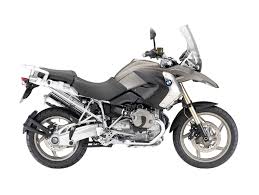
BMW R 1200 GS

TOUR INFORMATION REQUEST


*This tour is for Custom Tour Groups Only. If you have 8 riders or more, please contact us regarding pricing.

THE ITINERARY

Day 1 - Arrival in Okayama

Arrival in Okayama, transfer to Tsuyama. Welcome dinner tonight. Stay in Tsuyama.

Day 2 - Tsuyama to Kami (127 miles/205 km)

We will pick some classic rural roads that wind through the mountains, and an epic coastal road along the Sea of Japan. Be prepared to fall in love with the Japanese countryside. Stay near Kami.

Day 3 - Kami to Kyoto (163 miles/263 km)

We will ride to the UNESCO World Heritage city of Kyoto, by way of backroads today. Hold on, it's going to get pretty. Stay in Kyoto.

Day 4 - Kyoto Free Day

Wander the streets of one of the most celebrated cities in the world. Check out temples and walk the streets of this magical city. Stay in Kyoto.

Day 5 - Kyoto to Takayama (180 miles/290 km)

Enter the Japan Alps today. Get ready for squiggly roads, mountain vistas and hot springs this evening. Stay in Takayama.

Day 6 - Takayama to Nagano area (133 miles/215 km)

Take off through the Japan Alps on lesser-known scenic roads. We will seek out the Jigokudani Yaen Koen, known for its hot-springs monkeys this afternoon. Stay near Nagano.

Day 7 - Nagano to Matsukawa Town (145 miles/234 km)

Pinch yourself – you are in the heart of the Japan Alps. Enjoy epic mountain roads and make your way to a town nestled near the Japan Southern Alps. Stay near Matsukawa.

Day 8 - Matsukawa Free Day (up to 267 miles/430 km)

For the free day, riders can relax and unwind at our hot-springs hotel, do a short loop ride, or enjoy a full day ride to Mt. Fuji. Stay near Matsukawa.

Day 9 - Matsukawa to Toba (130 miles/208 km)

Ride the back roads of the Southern Japan Alps to the Pacific Ocean. Take a ferry from Irago to Toba today. Stay near Toba.

Day 10 - Toba to Totsukawa (140 miles/225 km)

Ride the back roads of Nara Prefecture today. Steep ravines, crystal clear rivers and inviting curves are the order of the day. We picked out a hot-spring getaway for this evening. Stay in Totsukawa.

Day 11 - Totsukawa to Tokushima (75 miles/120 km)

Ride into Wakayama Prefecture and think you are in the Land of the Lost. We will traverse Yoshino Kumano National Park, home to rugged, lush mountains and steep river valleys. We will board an afternoon ferry in the city of Wakayama and arrive in Tokushima on the beautiful island of Shikoku at the end of the day. Stay in Tokushima.

Day 12 - Tokushima to Kazurabashi area (100 miles/160 km)

Shikoku Island is incredibly rugged. If you have not fallen in love with Japan's natural beauty completely, this mysterious island will push you off the fence. We will stop in Nagoro, famously known as "Scarecrow Village." Stay in the Kazurabashi area.

Day 13 - Kazurabashi area to Tsuyama (120 miles/194 km)

Leave Shikoku and cross back to the island of Honshu on the Seto Bridge - one of the world's largest suspension bridges. Finish the day riding through river canyons to Tsuyama. We will be turning in our bikes in Tsuyama and jumping on a bus back to Okayama. Farewell dinner tonight. Stay in Tsuyama.
Day 14 Departure Day

Return home or keep the dream alive.

ROAD CONDITIONS:

This is an all-paved itinerary.

Total Miles: 1,400

Difficulty: Is this tour right for me?
Contact us with any questions

Included with the tour:

Hotel Accommodations
Premiere Welcome and Farewell Dinners
Professional MotoQuest Guide(s)
Support Vehicle
Support Vehicle Driver
Staff Trained in First Aid with Satellite Phone
MotoQuest Swag Bag
Photos Taken on the Trip
Automatic Enrollment in Global Rescue

Not Included:

Airfare
Meals on the Road
Gas
Alcohol
Alternative Tours
Travel Insurance
Gratuities
National Park Entrance Fees

Landmarks And Attractions

Embark on a thrilling ride to Mount Fuji, Japan’s iconic and sacred volcano. The scenic routes leading to Fuji offer breathtaking views and challenging roads for motorcycle enthusiasts.

The name Jigokudani, meaning “Hell’s Valley”, is due to the steam and boiling water that bubbles out of small crevices in the frozen ground, surrounded by steep cliffs and formidably cold and hostile forests. Originally, Japanese macaques lived in nearby mountains such as Shiga Kogen, but due to the development of ski resorts and forest clearing in the 1950s, they were driven out of their mountain habitat and came down to human settlements, becoming pests. The heavy snowfalls (snow covers the ground for four months a year), an elevation of 850 m (2,800 ft), and being only accessible via a narrow 2 km (1.2 mi) footpath through the forest, keeps it uncrowded despite the park being relatively well known. It is famous for its large population of wild Japanese macaques (Macaca fuscata), commonly referred to by foreigners as snow monkeys, that go to the valley during the winter, foraging elsewhere in the national park during the warmer months. The monkeys descend from the steep cliffs and forest to sit in the warm waters of the onsen (hotsprings), and return to the security of the forests in the evenings. However, since the monkeys are fed by park attendants, they are in the area of the hot springs all the year round, and a visit at any season will enable the visitor to observe hundreds of the macaques. Jigokudani is not the farthest north that monkeys live. The Shimokita Peninsula is at the northern part of the Honshū island and the northwest area of this peninsula, latitude +41°31′ longitude +140°56′, approximately 500 km (310 mi) north from Jigokudani is the northern limit of Japanese macaque habitat.


The remote and forested Akame Valley was a training ground for the Iga-ryu ninja between the 15th and 18th centuries. There are numerous waterfalls along a four-kilometer stretch of the valley accessible via a walkway along the river that provides up-close views. The waters pour into a gorge at the bottom of the valley at Muro-Akame-Aoyama Quasi-National Park. The name Akame, meaning “red eyes,” derives from a mythological encounter at the falls between En-no-gyoja, the founder of Japanese mountain asceticism, and Fudo-myo, a fierce esoteric Buddhist deity. There aren’t actually 48 falls; the number likely comes from the traditional number of vows taken by beings in the Buddhist pantheon known as bodhisattvas.It takes three to four hours at a leisurely pace to fully take in the falls. There are restrooms and teahouses along the route. You’ll also occasionally encounter stairs along the way; keep in mind that steel steps may be slippery when wet.


Nara Prefecture is a prefecture of Japan located in the Kansai region of Honshu. As of 2020, Nara Prefecture has a population of 1,321,805 and has a geographic area of 3,691 square kilometres (1,425 sq mi). Nara Prefecture borders Kyoto Prefecture to the north, Osaka Prefecture to the northwest, Wakayama Prefecture to the southwest, and Mie Prefecture to the east. Nara is the capital and largest city of Nara Prefecture, with other major cities including Kashihara, Ikoma, and Yamatokōriyama.[Nara Prefecture is located in the center of the Kii Peninsula on Japan’s Pacific Ocean coast, and is one of only eight landlocked prefectures. Nara Prefecture has the distinction of having more UNESCO World Heritage listings than any other prefecture in Japan. The Nara Prefecture region is considered one of the oldest regions in Japan, having been settled for thousands of years, and is widely viewed as the Japanese cradle of civilization. Like Kyoto, Nara was one of Imperial Japan’s earliest capital cities.[8][9] The current form of Nara Prefecture was officially created in 1887, when it became independent of Osaka Prefecture.


Shikoku ‘four provinces” is the smallest of the four main islands of Japan. It is 225 kilometres (140 miles) long and between 50 and 150 kilometres (30 and 95 miles) wide. It has a population of 3.8 million, the least populated of Japan’s four main islands. It is south of Honshu and northeast of Kyushu.Shikoku’s ancient names include Iyo-no-futana-shima, Iyo-shima, and Futana-shima, and its current name refers to the four former provinces that make up the island: Awa, Tosa, Sanuki, and Iyo.


While the tiny Japanese village of Nagoro continues to shrink in the face of aging and industry, its population has managed to stay nearly constant thanks to one local artist who has set about creating life-size doll replicas of the residents as they move away or die. When Japanese artist Ayano Tsukimi moved back to the little village where she was born she found that many of her neighbors were moving out to bigger cities and the ones who were staying were often not long for the world. Faced with the slow death of the village she so loved, Tsukimi had an epiphany one day after creating a scarecrow (or kakashi) for her garden that was meant to look like her late father: why stop there? Tsukimi began crafting other life-size dolls modeled on former locals, placing them all around the village in various states of action as their human counterparts would die or move off. After continuously crafting these cloth doppelgangers for over a decade there are now around 350 of the toy citizens. From random utility workers posed in the middle of a road repair to leisurely fishermen forever waiting for their catch on a riverbank to an entire classroom filled with lifeless pupils silently attending to their cotton-faced teachers, the village has become a fascinating (if unsettling) toyland. Ayano continues to tend to her creations, repairing damaged figures and always crafting new ones. With fewer than 40 breathing humans left in the residential community, Nagoro has become a strange fairyland inspired by loss, progress, and mainly, dolls.